


Defending Boracay’s Reefs
Divers Battle Against the Crown-of-Thorns Outbreak
By Dominic Napat
The Crown-of-thorns starfish (Acanthaster planci), or COTS, is a venomous predator that feeds aggressively on coral polyps. While healthy reefs can naturally sustain one or two, an aggregate density of three or more within a 10-square-meter area indicates a critical outbreak. Unchecked population surges can grow exponentially, decimating live coral ecosystems and destroying fragile reef structures that require decades to recover.
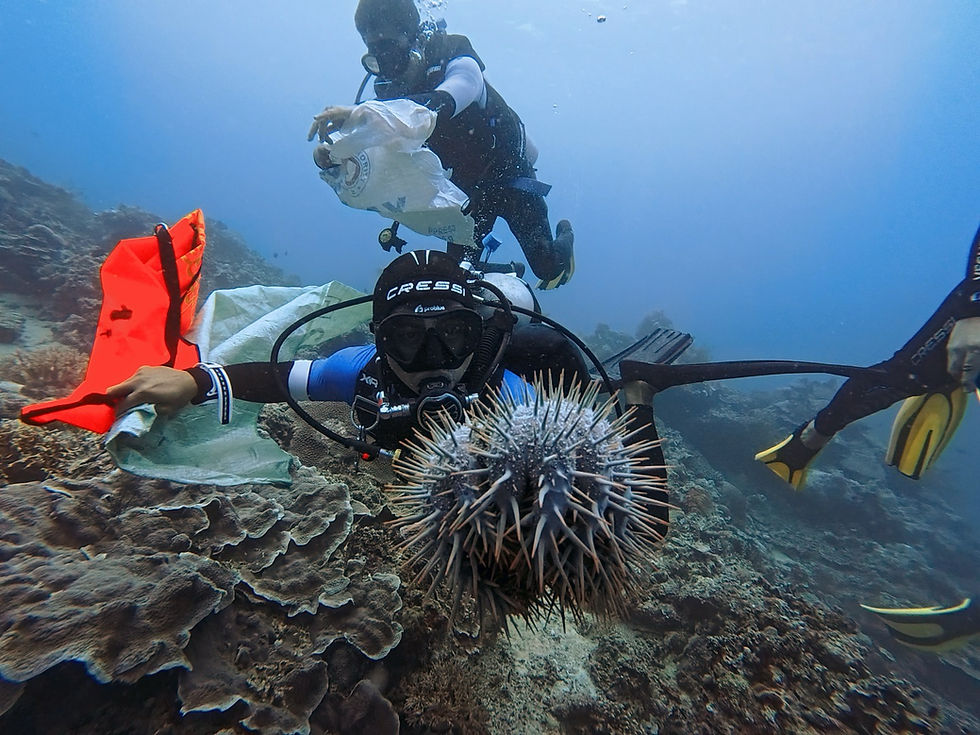
The Extraction Dilemma
Manual extraction is accessible but highly dangerous. It exposes divers to venomous spines that cause severe pain or anaphylactic shock. Physical handling can also trigger defensive "stress spawning," where a single adult COTS releases up to 16 million gametes, inadvertently worsening the local infestation.
To manage these risks, marine conservationists recommend alternative methods such as precise injections of organic acids like concentrated vinegar. Specialized techniques are often required to neutralize the predator effectively without causing further ecological damage or endangering divers.
Roots of infestation
In balanced ecosystems, the population of COTS is controlled by natural predators such as the giant triton snail, titan triggerfish, napoleon wrasse and starry pufferfish. However, factors like overfishing and habitat loss can remove these natural predators, leading to population imbalances that threaten coral health.
Saving the reefs
A recent collaborative effort involving the diving community and regional organizations has led to the successful removal of nearly a thousand starfish. This conservation initiative united volunteers and local divers with key organizations: Boracay Business Administration of Scuba Shops (BBASS), Department of Environment and Natural Resources (DENR), Municipal Disaster Risk Reduction and Management Office (MDRRMO) and the Local Government Unit (LGU). These coordinated actions aim to protect the island's marine biodiversity and ensure the long-term health of the reef systems.


Comments